Showing posts with label Malbec. Show all posts

Friday, June 21, 2013

Lewis Wiines

For months, I had been trying to finally visit Lewis Wines. I had known about it as early as last Spring, and then late in 2012, Chris Brundrett (of William Chris Wines) mentioned he was headed out there for a pre-opening tasting. Due to a snafu, Sean and I didn't get to tag along. Flash forward to Spring 2013, and everyone is eagerly awaiting the official opening; that is when I heard they were doing appointment only tastings. I tried to arrange one, but they weren't available. I tried again, only to not make contact. Finally, on a Saturday evening, I called owner Doug Lewis to finally make my appointment.

I'll admit, it has been nearly a month since that visit. I have had a hard time to writing this up; getting to this post was difficult. The visit was not the problem; the tasting and visit was great. The problem was with what happened later in the day. A difficult family situation got out of hand and became a real mess. It's been hard to write about something so great with the shadow of what came later hanging over it. Now, I'm ready to move on and finally get to one of the most inspiring winery visits I have ever had.

Doug Lewis (to the back in the cap) and Duncan McNabb (red shirt) providing a group tasting

When Sean and I arrived, Duncan McNabb, Doug's partner, met us at the door. His partner, Doug Lewis soon joined us. I was surprised as I looked at these two new Texas winemakers: they were young. Now I have gotten used to the Texas wine industry getting younger, but younger meant closer to my age -- thirities. When I looked at these two, I realized they were old enough to have been my students. I was right; Doug admitted to being only 26. This took me back for a moment, but when I put it into perspective, I realized this was a good thing. Our next generation of Texas winemakers are starting out, trying to master their craft and experiment. This is a sign of a robust industry, one with a future. And after what I tasted, I knew the future holds great promise.

During my tasting, I talked to Doug, trying to get an idea how he came to wine. I don't care what people say about the Millennials getting into wine; I don't see the numbers to support the idea. When I am visiting wineries and wine club events, the visitors are getting younger, but most are still older. And when I talk to my older students -- those in their twenties -- most don't even drink wine. So, Doug had to have acquired a taste for wine somewhere, and I was curious where. As I found out, it was one of my favorite places, Pedernales Cellars. Doug got his hands dirty helping out manager Jim Brown and winemaker David Kuhlken. While Doug was there, he began to experiment with wine. Before long, Pedernales Cellars was giving him the connections and knowledge he needed to start his own winery.
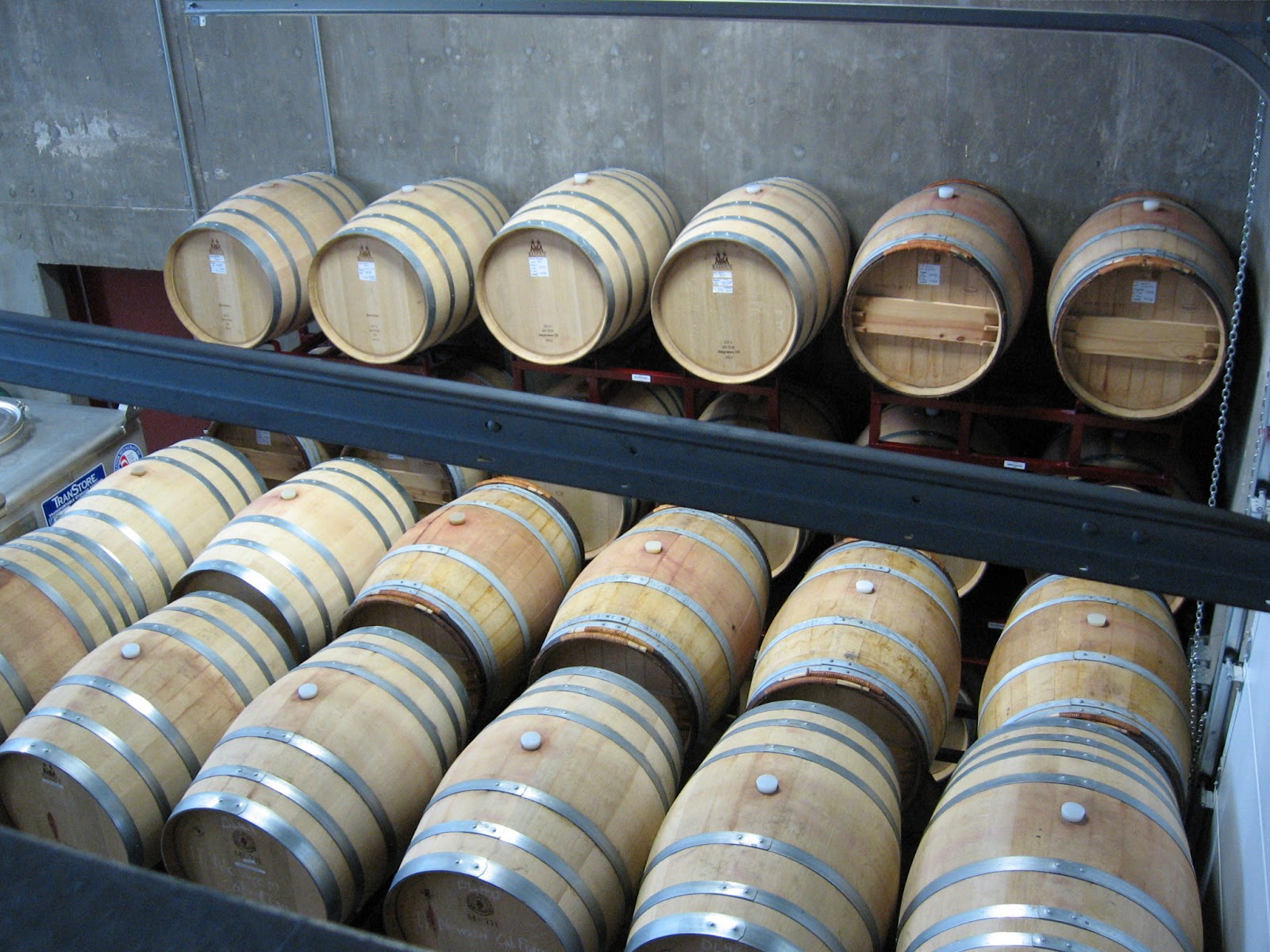
The future of Texas wine: barrels at Lewis Wines

And one of the most valuable connections Doug got was Texas grape growers. Doug knew who were the top grape producers in the state, and even knew how to get a hold of him. It even gave him direct lines to highly sought grapes. Doug recounted one time when one High Plains grower was a bit leery of selling his grapes to a new winemaker. Luckily, Doug had the best references he could get and scored himself incredible grapes. His connections have also allowed him to get some of the limited and prized Touriga. After a recent visit to Spicewood Vineyards, Brad Dixon told me how hard it is to get Touriga. When I heard that, I knew Doug's supply was a rare commodity.

And the work Doug and Dave are doing on their little slice of 290 is something to behold. To be honest, Sean and I are on a VERY tight budget. We went telling ourselves we really shouldn't buy any wine, for now. That rule didn't hold; we left with three bottles, buying three of the five wines available. Doug and Duncan are producing wines that suit Sean's and my pallets quite well. These wines show a growing mastery of the grapes but also a great playfulness. In fact, that playfulness is what stands out with these wines. I found many of the wines we tasted to have something unique about them, setting them apart from similar wines produced throughout the state.

Where the whites were at the time of our visit

As of our tasting, the whites were still in the barrel, growing and maturing. The whites are excellent examples of Texas Viognier. The 100% Viognier made from Binghman Vineyard grapes was a crisp white with a nice hint of acid. The nose and the taste was smooth: a consistent, a bouquet of citrus tones with an emphasis on pineapple. Take this same great varietal and make it 52% Viognier and 48% Chenin Blanc, and the bright crisp wine becomes one that is soft and cooler, a easy sipping dry white. This second white was more subtle, but it also highlighted the sweetness inherent in the citrus. The 100% Viognier would make a great pairing wine, bright and clear. The second, with its more laid back character, makes for a great end of the day sipping wine.

When we moved on to the reds, I knew something wonderful was coming up. Viognier is one of those whites for red drinkers; well done Viogniers often translate into strong reds. That was again the case here. I beamed from ear-to-ear when I saw the Texas Malbec. The grapes from this terrific wine came from Neal Newsom. When Doug went up to get the grapes, we had to hand pick them. Well, he was in luck. A family of Mennonites aided in the harvest; they actually picked more than Doug and the others with him. As for the wine, it was rich, earthy full bodied Malbec -- aided by a hint of Petite Verdot. The wine made my think of the darker Argentinian Malbecs. Of course, this was one of the bottles we brought home.


Neal Newsom provided grapes for the Lewis Wines' Cabernet Sauvignon. I had, for awhile, turned away from this perennial red. However, I began to think twice when I had the Newsom Cab from Becker vineyards. And then came the Bending Branch Newsom Cab (San Francisco award winning Cab by the way), and on and on and on. I came back to Cab because there is something about those Newsom grapes. And this recent addition to that tradition is another great example. This wine had a smokiness that is so often lost in smooth Cabs; this less fruity tone makes it stand out.


As I mentioned earlier, Lewis Wines has scored a major coup. They have Mason County Touriga Nacional (they have now gotten the grapes from Round Mountain, whom I am guessing had once been Spicewood's provider). Touriga is such an exciting grape. Every Texas wine I have had it in --- most blends -- have remained favorites. From my first taste with Sandstone, to my growing appreciation with Persissos, and now all of my recent forays -- Fly Gap, Spicewood -- I am enamored. The 2010 Texas red wine is a blend of 50% Touriga, 33% Tempranillo, and 17% Tinto Cao. This unique blend  has a complex nose that contrasts from flavor of the wine; the nose is strong with a powerful sense of dark berries and fruit, but the taste is less so. The flavors are currently muddled in the wine. The beginning is a light, gentle taste that grows. By the middle, the wine struggles to bring forth the three grapes. And at the end, the wine smoothes out and and becomes a harmony of flavors that leaves one glad they took the journey.  We bought a bottle to let it age a bit, as I think the wine has great potential but needs to mature a bit.


Lewis Wines had two top red blends from 2010 grapes. The other is more Tempranillo (55%) paired with 35% Mourvedre, 8% Syrah, and 2% Grenache. This wine provided a bold, fruit flavor that makes great use of the non-Temp grapes. In addition to this Temp blend, there was a 100% Tempranillo sourced from Kuhlken family vineyards and Bingham vineyards. I expected an earthy Temp, like what is normally found from Pedernales Cellars, but was happily surprised to taste a more nuanced one, one with more fruit, a softer touch on the earth and spice and brighter with the fruit. Of course, it is with the touch that brings out the softer side of Tempranillo that can create the blend.


A field of wildflowers on the road from the winery back to 290
New Wine
Red, yellow, with hints
of purple stretch out above
tall grasses, age old dirt.

All I can see: a fresh look 
springing forward to tomorrow.


I enjoyed the visit to Lewis Wines. Duncan and Doug are so friendly and welcoming. And their wines feel just the same. These aren't the powerhouse red wines coming from some of the Texas wineries. These wines are welcoming ones; ones that younger wine drinkers can be introduced to and find their way. And for we more experienced wine drinkers, they are a "Howdy" and a smile that allows us to sit back and relax into the wine. This is a bright new future for Texas wine.


Wednesday, October 10, 2012

WW: William Chris Wines' Enchante

William Chris Wines is one of the friendliest wineries along the Texas 290 wine trail. The staff is quick to welcome every visitor and work to make the newcomer feel like a part of the William Chris family. And once someone joins Hye Society, the wine club, a new family member is inducted. This spirit of friendship is expressed well in the winery's signature blend, Enchante. This wine is a wonderful introduction; it is a friendly and relaxed greeting that makes the drinker feel right at home.

Tasting

This Texas Hill Country red blend is mainly Merlot with a good proportion of Cabernet Sauvignon and Malbec. It is evened out with Cab Franc and Ruby Cabernet. This unfiltered wine spends twelve months in new French and American oak.


The current 2010 blend is a strong red with rich fruit scents on the nose. These ripe, dark berries dominate the palate during tasting. Despite this fruit forward nature, the wine is not sweet; it is a lush dry red. This is made possible by the hint of the Texas terroir, the mineral nature so common in much of the Texas soil, coming out, at first, at the end of the taste.  With continual tasting, the essence of minerals and soil comes through a bit more, starting at the middle of the palate. This flavor sits just underneath the fruit and intermingles with the fruit as one continues to sample the wine. At this point, a deeper complexity starts to take shape as the two flavors intertwine and mingle to make a wine that is not so easy to pinpoint. The aftertaste becomes increasingly harmonized between the two, making a pronounced last flavor. This flavor then melts away inviting the drinker to take another sip.

Visual Tasting

My first thought leaned towards the serene and a concept of two seemingly different parts going together. This made me think of a smooth, fluid brook that is taking its time as it makes its way through a wooded area.

The brook is at a state of ease while also moving. It flows naturally, unhindered, as it makes its way on its own time. There are no obstructions, no rocks or debris, littering and disrupting its path. This stream is idyllic, much like the taste of berries that predominates the wine.

The banks are the most interesting part. The stream has no defined edges. Instead, it melds with the grasses and soil that edge it. In some places the brook laps at the soil, and at others, the grass grows out into the water. The two seem intertwined; they fit together and cannot be taken apart. This is like the tannins and mineral quality of the wine that settles into the fruit but doesn't overpower it.

And of course, this stream is dotted with berry bushes. Blackberries and deep red raspberries pop up now and again. The berries are ripe; some are beginning to ooze and attract the occasional bee. The scent takes flight on the movement of the stream and fills the landscape. This is a place to rest against a tree and take a moment to drink it all in. Enchante asks for the same.

Secondary Tasting: A Real-Life Connection

The large oak behind the tasting rooms at William Chris, June 2012
 After I saw the stream, I thought back to the winery itself. The lands behind the current tasting room (and the new one that is nearly ready and looking great) include a large, beautiful oak and a great growth of natural Texas. This of course links well with my image. But this is not what I think about when I think of William Chris. I think about the people. And then it hit me: this wine is William Chris.

As I mentioned earlier, the winery is one of the friendliest. Every time I arrive, I am quickly welcomed. Someone sights me and calls out a greeting. Before long, I find myself hugged. I love this. I love the friendships I have formed at this winery. This matches the comfort and naturalness of the mingling flavors in this wine.

Bill Blackmon
But, this wine is also the two men at the helm: Bill Blackmon and Chris Brundrett. The two men in charge project very different personalities, but they are ones that blend well together. Chris is the fruit flavor of the wine. He is the obvious face of the winery, much like Enchante's fruit forward nature. I can't leave the premises without a hug from him. He welcomes everyone in his natural down home way. On the other hand, Bill is a quieter. He, like the tannins and minerals, tends to hide behind the larger personality. But also like those flavors, he shows to be a very important figure that is crucial to the overall success.This is evident in his dedication to the vineyards that supply the winery with some of the most incredible grapes.

Chris Brundrett
In the end, Enchante is a wine to sit back and enjoy. It is easy to grab a bottle, find a comfortable shady spot, and let the day pass at the winery in Hye. Even at home, the tension slips away, and I feel transported and comforted by this wine. It is a good friend from a winery that wants to make every visitor a friend. 

Wednesday, August 15, 2012

WW: Brennan Malbec

This past Saturday, Sean and I made a quick visit to 4.0 Cellars. I was eager to try the recent WOW -- Wine of the Week. The Fall 2008 Comanche Vineyard Brennan Malbec was everything I was looking for and more.  I expected a strong Texas Malbec, one with a subtle complexity and minerality. What I instead found was somewhere between the best Texas has to offer and the smooth deep Malbecs of Mendoza Valley Argentina.

Brennan Malbec

Tasting Notes

From the beginning, this wine is a shock. It's aroma matches that of most Argentina Malbecs, rich and fruity, but deep and not sweet. It is a seductive aroma. This wine asks to be tasted.


The taste sits somewhere between Texas and Argentina. The wine starts with the smooth, rich, dried fruit flavors of an Argentinian Malbec. The fruit forward nature fills the mouth and is rich and heavy. As the wine moves over the palate, the complexity deepens. The smoothness is a bit rougher as the minerals and earthiness of a Texas Malbec rounds out the flavors; however, the typical smoothness of the Malbec is never lost. It is a journey from the South to the North (funny to think of Texas as North).

A Texas Winter

Languid ripples lap 
the feet of towering trees.
The sun keeps winter away.

The first part I noticed was the consistent richness of the wine. Through this whole process, the richness from the beginning is the most cohesive part, as if it is the glue that joins the smooth fruit flavors at the beginning to the complex mineral tones at the end. But what stood out most to me was what can best be described as temperature. The wine gives the impression of being cool. When it is first tasted, there seems to be something light and cool in it. But that is deceptive. There is a warming undertone that grows more noticeable as the mineral and earthy flavors take over. This kept nagging at me as I drank it; I couldn't place it.

Richness

East Texas Lake @ San Antonio Botanical Gardens (late Fall)

Before long, an image of a lake came to mind. The lake was encased by tall pines and water friendly trees. I knew I was seeing the lake in the East Texas zone at the San Antonio Botanical Gardens. This popular retreat resembles the forested areas along the Eastern border of Texas. It makes me think of driving to Plantersville for the Renaissance Festival in the Fall. The highways are lined with these tall looming pines and other wet climate trees. They always seem much taller than the trees here in the Central region. They always seem so green.

This was the first image I clearly got. I noticed that at the end of the wine, the Texas part. The minerals and earth hold the more delicate flavors in, just like the trees ringing the lake, a fence so the lake could stay safe and protected. Here, the richness starts to take shape. I start to see the earthiness in the trees: the deep roots, the rugged bark, and the great greenness.

A Winter Egret at the water's edge (SA Botanical Gardens)

But then there was the richness of the front-end of the wine, the fruit richness. This is the rich, dark soil that overpowers the senses. The soil in East Texas zone of the gardens is potent; before I even reach the lake, I can smell a mustiness, but it becomes deep and moist in its scent -- just like the scent of the wine (minus the mustiness). But the actual feel of the ground beneath my feet makes me think of the deep, rich fruit flavor of the wine. The ground here is dark and soft (a bit spongy) underfoot. It feels so dense, so deep. This is the fruit flavors and richness that I taste early in the wine.

Cool Tinged Warmth

Then there is the wine's temperature that so attracted me. What was it? It was so much like a visit Sean and I had to the gardens last winter, late fall. The sky was clear and crystal, brilliant blue. My first thoughts, being that it is supposed to be fall/winter, were it must be chilly; the night before must have been equally clear, which should lead to a crisp day. And when I first step into the Botanical Gardens and the light North wind blows, I am touched by the cool of the day; I relish it. When I first sip at the wine, there seems to be this same coolness.

Wintering ducks at the East Texas lake

However, this is Texas, and it never gets truly cold this far south. As I slowly move through the wine, the warmth becomes more and more noticeable. The same with late fall, early winter. On those beautiful clear days, the heat sneaks up. Slowly but surely, it is impossible not to feel at least a bit warm. And if I am out at the Botanical Gardens, I know I will get warm. When I leave the shade and cool of the East Texas lake, the open fields of the Hill Country show up. Here the sun beats directly down. Before long, even with a light breeze blowing in from the North, the sun warms things up. This is Texas after all, and even in the coldest parts of the year, it is not odd to have days reach a high into the seventies. Early winter is the most deceptive time of year, as this is when it seems cool and a bit chilly, but before long, it can be quite warm (a comfortable warm). This is no different with this enticingly tricky Malbec.

The Winter sun beating down in the San Antonio Zoo bird exhibit


This wine so fascinated me as I drank it. There was so many interesting aspects in play, but I couldn't quite put my finger on them. I spent much of my second glass slowly swirling the wine in my mouth. My eyes closed, I searched for the illusive image that was just out of reach. I knew, without much effort, that the wine was a journey that moved down the mountaintops near the Mendoza Valley, snaked up the South American rivers, crossed through harsh desert terrain, and finally rested in the limestone beds of Texas. I knew it was more. It reminded me of some of my favorite sensations; at that point, I knew it was a peaceful escape into nature during my favorite time of year. And right now, an escape to a cool day in the shade sounds perfect.


Thursday, July 19, 2012

31. Independence Day & Bastille Day Throwdown: Wine Tasting @ Vinously Speaking

31. Independence Day & Bastille Day Wine
France, U.S., Texas:
captured in gem-like liquid
and sharing my glass.


This past Saturday offered me a chance to enjoy wine at home in San Antonio. San Antonio's newest wine shop, Vinously Speaking, hosted a tasting event that showcased French, American, and Texas wines. When I arrived, not long after the event's start time, Sean and I entered a quiet wine shop. We had time to browse through the eclectic selection (a well-earned adjective) before starting in on the wines.

The small little store greeted us with a French feel. French music, provided by DJ Phylo, and French goodies -- tasty cheeses -- lead us to the bar where owner Ceci Barretto was pouring five French wines. In the back portion of shop, fellow owner Melissa Unsell provided three unique American wines. Melissa had help from Pedernales Cellars own Shannon (pouring a great collection of Pedernales wines), Michelle from Daphne and Lola (offering a beautiful display of jewelry), and great BBQ turkey from Monz Bonz BBQ. How could this not be a good time?

Vive La France!

French -- cheese -- display
One of the themes of the event was a comparison of French and American wines; however, Ceci's five French wines allowed for a direct comparison among the group, no American wines needed.

French White #2

French White #1
  •  Whites: The two whites from Gascony were both dry and crisp with light flavors that were wonderfully refreshing on such a hot, humid July afternoon. What was most interesting was that the two whites came from nearly the same blend of two grapes -- this allowed for great comparison. Both wines, Cedrus le Blanc and San de Guilhem, contain Colombard and Ugni Blanc (I have to admit, thanks to Dry Comal Creek, I enjoy Colombard). The difference was an almost carbonated, sparkling feel in the San de Guilhem. By adding the grape Gros Manseng (a new one for me), the wine tends to pop a bit. These provided a great start to the tasting. 
Malbec Rose'
  •  Malbec: Two Malbec's from Racine de la Terre in Pays d'Oc highlighted a French varietal less associated with France than the New World. The first offering was a dry, rounded rose' that was light and hinted at its fruitier nature. The second, a typical red Malbec, was as expected from a French Malbec. Malbec, no matter the region, has a depth created by its earthiness. In France, this earthiness seems more like tobacco and minerals, creating an edgy depth and complexity. In Argentina, and in Texas, Malbecs are earthy, but the flavor is a smoother one that hints at softened leather and dry minerals. I reaffirmed my conclusion that I prefer New World Malbecs (though Sean appreciates the French ones).
  • Traditional French Malbec
  • Red Blend: We ended with a more traditional French blend, a 2010 Cotes-du-Rhone Linteau Grenache blend. This wine, like so many French blends, needed to be opened up. Once I got a few swirls in and allowed the wine to rest for a few moments, I found a smooth wine that provided minerals and rich fruit. This ended the French selection well -- so much so that I brought a bottle home.
Cotes Du Rhone with Ceci in the background

And the rockets red glare...

The American selection was limited to three choice, but these three showcased the variety of American wines that match well with each region's terroir and climate.
Chenin-Riesling
  • White: The Chenin-Riesling blend from Gravity Hills in California's Central Coast surprised me. I am normally not a sweet wine drinker (as many Rieslings are), especially sweet whites (Muscat being the one exception), but this blend's Chenin Blanc softened the Riesling's sweetness and rounded out the wine well. Honestly, I was happy to just have a California white that wasn't a Chardonnay.
  • Red 1: The Mankas 2007 Cabernet Sauvignon was next. This dark and earthy Cab was not what I expected.  Normally, I find CA Cabs clear and straightforward, but this delightful wine was hearty and smooth with interesting earth notes.
  • CA Cab
  • Red 2: The standout was a Sangiovese blend from Arizona. This surprising wine was bright, like its home state, and smooth. This wine was fruity and earthy. It rounded out the three wine selection for the US well.
AZ Sangiovese Blend

  Don't mess with Texas!

Pedernales Cellars and their fine selection
We ended our tasting with a tried and true favorite, Pedernales Cellars. This is one of two Texas wineries carried (in quantity) at the shop -- the other is Perissos. Shannon, who is always a lot of fun, shared some top Pedernales picks, like the Vino Blanco, the Texas Dry Rose', and the Armadillo Leap Tempranillo. This selection paired well with the final American wine; another warm region with warm weather varietals. The highlight of the three was the rose'. In year's past, this was mainly Grenache, but it seems there wasn't enough Grenache to finish the batch, so winemaker David Kuhlken added the signature Tempranillo (I cannot say enough about Pedernales' Tempranillo). This addition brought a breath of new life to this already great wine. Suddenly there was a power hidden beneath the dry, fruity flavors of this rose' blend. This wine is now energetic; it has a lush, full flavor that got me ready to face the July heat. I was so in love with it that I made sure to leave with a bottle, and I added it to my must buy list the next time I stop by the winery (soon I hope).

After a nice chat and tasting in back, Sean and I made our way to a bustling front room. In less than an hour, the little shop was almost bursting at its seams. This is a nice change from the past. Ceci and Melissa are the third owners of a wine shop in this spot, and I have witnessed all three (I use to live in an apartment that you can see from the back of the shop's complex). In the early days, they were wonderful but pricey for my limited budget. The next owner provided a limited and relatively safe collection of wines (nice but boring). This great little shop, hidden in a strip mall, back behind an always busy McDonald's, and flocked by office buildings, apartment complexes, and hospitals, is a great addition to the San Antonio wine community, and a touch of fun and class on the Northwest side. And on top of everything else, it is a great destination for Texas wine drinkers, with good Texas options and an array of less common wine choices to appease any palate. And best of all, the prices are reasonable and affordable. I'll be back for the next event and when I need a resupply of wine.
A busy tasting room and a successful event!

Thursday, May 31, 2012

22. Siesta: A Visit to Fiesta Winery

22. Siesta
Summer's glaring sun:
hindered by the wine's cool breath,
lessened by a hint of sweet fruit.

I will relax here awhile.

Entrance to Fiesta Winery

The end of my first day in the Northern Hill Country took my husband and I to Fiesta Winery. We were told to expect something different. In fact, this region is very happy that the wineries are all a bit special, a bit different from one another. Fiesta, expect to settle in and relax. From the setting to the wines, this is a place to just sit back and take it easy.

When we arrived, we were encouraged to find a table. Only one other table was occupied, a group that had just finished their tasting and was having lunch. We skimmed over a menu of the wines, trying to decide which ones to taste. We were also supplied a score sheet of sorts. On the sheets, we listed our choices (to help the person serving us) and later used them for comments.  I have to admit, I like when wineries give guests something with the wine names and places for comments; it helps to make informed purchasing decisions. We meandered through the wine list and chose an eclectic lot – as the wines here are not the normal fair). From them on, we strolled through the wines, drinking at our own pace. And of course, seated at a table provided a chance to privately share our thoughts and easily take notes.
Inside Fiesta Winery

All that being said, I have noticed a drawback to this sort of set-up. At first glance, the seated and served tasting seems relaxed and nice, but after the visit here, and later at Woodrose Winery the next week, I am beginning to wonder. I always look for a memorable wine experience; I hope to get involved with the wine or the winery – a good example is our chat with Jim Johnson just before our visit to Fiesta (see A Northern Hill Country Landscape -- Visiting Alamosa). I want to take a way something special. This special experience  can be hard in more service-like setting. The person serving the wine has to work harder. It is easy to strike up a conversation and socialize at a bar; there is a natural sense of camaraderie while both parties saddle up at the bar, gaining crucial eye-to-eye contact. At a table, this can be achieved only one of two ways: either sitting down at the table with the guests or just hanging around the table (like many top wait-staff do). Unfortunately, most times I visit wineries like this, no matter how well meaning the folks are, something seems to draw their attention way and keep them from crossing the barrier created by the table. At Fiesta, I realize it was a lazy Saturday afternoon without much going on, and I also realize that Sally was probably busy increasing the presence of Fiesta online, but it wasn’t the homey, welcoming experience I expected (an expectation created by visiting their website).

So, with the tasting underway, the focus quickly turned to the wine. The wines here are almost entirely blends (which can be a VERY good thing), and not the traditional sort. Most of the wines are blended with fruit. This is interesting when it works. The Rhinestone Cowgirl is one of these. This blend of Pinot Gris and Malbec (that single word always piques my interest) is blended with cranberry and prickly pear. The resulting blush is a gentle, sweet fair that is more like a pleasant fruit drink or cocktail. The drawback here is that it isn’t much like wine.

The vineyard just outside the tasting room
That isn’t to say that there aren’t good wines. Fiesta has followed the new Texas tradition and has a solid Tempranillo. This one feels very Spanish, spicy and earthy, the taste of tobacco and leather is powerful; the spice though adds a depth that doesn’t weigh down the drinker. We were told this was the winemaker’s favorite, which is no surprise. This Tempranillo didn’t taste like the Fall Creek one we had the night before (that one was subtle and smooth) or like the Tempranillo blends at Alamosa. Instead, it was robust and swarthy. I could almost imagine a Spaniard, straight from the vineyard, sweat beading on his sun-darkened, resting under a large tree sipping at this wine.

In the end, we lazily moved through our selections, both happy to end with the robust Tempranillo. Inside the cozy ranch-house like tasting room, we watched the sun blaze down on the grounds around us. This little stop is a nice place for escaping the summer heat, from the seating to the wines.

Tuesday, April 3, 2012

6. Bold

6. Bold
Dark, deep tannins grasp,
seeping in, complex tones sway,
desired red wine.

Slowly, my heart, take it in.
Let the heat slide down, satisfied.


I've recently read that bold isn't much of a wine term; it is mainly used in marketing. As such, it isn't a clear definition. But there is often a generally accepted idea, that bold wines are heavy with tannins. This gives some freedom in the definition, as is the case with so many abstracts. 

For me, bold does have the heavy tannin, but it is a wine with strong flavors, often many not quite melding but acting in harmony of one another.I usually associate the deeper berry flavors -- blackberry especially -- and other darker fruits -- currants -- with this. I also would say many bold wines have a hint of chocolate, as well as either a smoky, leathery, or oaky taste. And it doesn't take a genius to know that these flavors do no blend. Instead, they work alongside one another. Often one moves into another, but even more likely, they work as a two flavors in one. Fruit and chocolate naturally do this. When the darker fruits are put into dark chocolate, no one flavor takes over. At times, one is more powerful than the rest. One the edges, they are both there, both noticeable but match like related related colors. For me, I think of my chocolate covered blackberries -- where the chocolate is thick, you taste chocolate; towards the center, it is all blackberry; but where the two meet, it is chocolate and blackberry, separate, equal, and yet, together.

I also often connect bold wines warmth; they are wines that seem to be warm in the mouth and on its way down the throat. Very bold wines are warming on the palate, they almost smother it, like a rich sauce or melted chocolate. As they slide down the throat, they stay warm, like a warm drink on a cold day. Once they accumulate in the stomach, they have a spreading warmth. They are delightful, but not always best for hot summer days.

In the end, my definition does share similarities with most people's, and so both definitions would definitely accept the Cabernet's --my next post by the way -- as bold wines. But I would go beyond that and allow some medium bodied, and not just full bodied, reds into this category. One person I read would place Malbecs here. Honestly, I would place most Texas Malbecs, as the soil adds the deeper complexities more reminiscent of Cabs; however, smoother Malbecs don't always match up. The Malbecs that are more fruit forward and  very smooth aren't bold; they don't have the more visceral effect of a bold wine. One wine I saw missing from most lists, that I would put near the top, is Tempranillo. These wines are always bold; their spicy nature makes them powerful. And, their rich tannins create a depth of flavor like that of a Cab. 


So what is bold? I think bold is what you make it. It will have the distinct flavor of tannins, but is that enough? What you find excites you when you drink a tannin rich red is bold for you. So, be bold.

Thursday, March 22, 2012

3. Malbec (William+Chris Wines)

3. Malbec

Oozing ripe berries
full, strong, about past their prime:
tangy, sweet darkness.


In early March, I attended the William+Chris Hye Society Malbec release party and vine planting. It is experiences like this that have provided me new insight into wine, in this case my favorite wine. I love Malbec; it is my favorite varietal. When I first really tried it, I fell in love. This once forgotten wine is having an extraordinary comeback, and I am happy to sing the praises of the Texas born Malbecs.

First things first, an introduction to the varietal. This French grape had a rough time. When the big attack on wine occurred -- one that was saved by the Americans -- Malbec took a hit, especially in Bordeaux. It didn't do well when American vines were brought into help (Wesley 44). But, a few decades back, Argentina decided to cultivate the grape. It has had great success and put Argentina on the wine map. Mendoza Valley Malbecs aren't hard to come by -- and at reasonable prices -- and they provide a great wine. Since then, it has been growing in popularity.

But what makes this wine popular? It's diverse. It has the fruit and sweetness found in lighter reds. In fact, berries are the predominant flavor associated with this. Many experts will say dark colored berries -- blues and blacks -- but I have come to think of it was a wine of darkened berries; in the best Malbec's I am reminded of my two favorite foods, blackberries and strawberries. The catch, to me, is that the wine reminds me of really ripe berries, berries that if they are not eaten now they'll be bad tomorrow. I love those berries because they are rich and taste of the darkness; it adds depth to the berries' sweetness. I see this in Malbecs. In addition to sweetness, Malbec's are strong. Like other full body reds, their tannins are noticeable. Here I agree with experts who say that the tannins provide weight for the sweetness (Wesley 51). The tannins aren't as strong as Cabernet Sauvignon, but they are there. I guess that's why I love Malbecs: the tannins are enough to create a wonderful balance to the fruit with out overpowering said fruit. In the end, this wine is great for pairing, and as is often my case, drinking on its own.

My introduction to Malbec was not through Argentina -- though I work hard for an Argentine education -- but from Texas. My first Malbec was from Becker Vineyards. Since then, I have gone out of my way to sample other Texas Malbecs. I do have to say that I will happily drink a Becker Malbec any day. But how is it that a grape, currently growing in the foothills of the Andes, is successful here? Malbec is a malleable grape. It can do well in most climes and is very adaptable. Specifically, it is a grape that can take on the worst that Texas can throw at it -- heat waves and droughts (Wesley 44). So its recent adaptation to the Texas Hill Country -- known for its colder winters (freezes are not uncommon, but we are talking cold for Texas), drought stricken lands (we are just coming out of one of our worst recorded droughts), and heat waves -- is no surprise. And just this month, I was happy that one of my favorite wineries, William+Chris, had decided to take a shot at it.

First let me preface this with the fact that William+Chris' current bottling of Malbec may be gone -- they had only a 120+ cases. But they have said that it will be back, so I hope next year's quantity will be much higher. For now we will talk about what sits before me, the first Malbec.


As the poem and the experts say, there is a level of sweetness to Malbec, and this one embodies that. When I first started this post I had just eaten really ripe strawberries, and this afternoon I enjoyed really ripe blackberries and raspberries. The wine shares the berries' qualities. This wine is a sweet, berry-ish wine. The first full taste is that of berries that are almost too ripe. They are a dark, deep sweetness, not the lighter vibrant sweetness we generally think of with strawberries. At the tip of my tongue, the sweetness is subtle, light, but most definitely there. But as the wine washes back just a little, the dark richness takes hold. The sweetness has depth; it is detailed. It slowly oozes out and saturates my taste buds. It fills my mouth and coats my tongue in a richness, also similar to a sweeter dark chocolate. In fact, at this point, I most reminded of dark chocolate strawberries that are almost no good. Both the strawberries and the wine cannot hold the sweetness back or keep it safe; the sweetness muscles its way through. The taste is bold and strong.

The flavor doesn't stop there. As I said early, this is a full body red, so the tannins are there. And like most tannins, they appear as the wine finishes its journey to completely fill my mouth. Here the sweetness gets its edge. The sweetness mellows and mixes with the acidic taste to round out the wine. But unlike bigger reds, again Cabernet Sauvignon is the main one, it doesn't have a overpowering tannin. It doesn't bombard the drinker with that strong sense of tobacco or oak. It is softer, gentler. This allows the wine to blend the flavors well, creating a wonderful balance. And, like other Malbecs, makes it eminently drinkable.

But, it does differ from both Argentine Malbecs and other Texas Malbecs. Texas wines are interesting creatures. They seem to have a hint of mineral in them. At some point there is this rich, strong flavor, like that of other minerals we use in cooking. Too me, it is like some of the richer smoked salts, that sort of sensation but not salty. I am guessing this is a result of the terroir in Texas -- we have heavy mineral deposits in out soil, and those minerals are usually near the surface. Growing up, I didn't get far with my digging before I reached a solid layer of caliche. This rock, often a major element in cement, is very common. Add to that the extensive limestone, quartz, clay, etc. found in the soil, and you can easily see where that mineral taste comes from. In Texas wines, it usually blends well with the reds' tannins, and blends best when the wine is aged in oak. It adds a new layer to the tannins, a turn or detail I haven't found in other wines. In the William+Chris Malbec, it is there but not strong. There is just enough there to notice it with a careful taste. In fact, I find it a great bridge for the fruit to reach the tannins. But unlikely other Texas Malbec's, like Becker, it is barely there. It is a hint that blends fluidly. I have to admit I have come to appreciate the mineral quality of Texas wines, but sometimes, it can be overpowering, especially once you have had several glasses. William+Chris controls the mineral well, not letting it take over. They do this in ALL of their wines (a testament to their carefully and thoughtful wine making), and it is at its best here (the current Hunter and Enchante are also great examples of this as well). In the end, I can drink this wine, glass after glass.

The William+Chris Malbec ranks with the best of this varietal. It is a great work of Texas wine making, but it is also a great Malbec. It is a delight. And like all Malbecs, the environment speaks in this wine. On the day I first enjoyed the wine, it was early Spring, a sunny Sunday afternoon.


The day was warming nicely. The sunshine danced among new green leaves in the small collection of shade tress on the property. The wine went well with this. The color shone brightly and was a nice match for the new green growths all around. The taste was as warm as the sunshine, and like the sun, slowly sunk in (I only needed one glass!). Of course, it was that warmth from the sunshine and the Malbec that made me not realize I was being bitten by an unknown bug -- the remnants of the bite just a trace several weeks later. I can't recommend this Malbec enough, and I can't recommend any decent Malbec enough.


Works Cited
Wesley, Nathan. "Aging Malbec." Wine Spectator 15 Dec. 2011: 51.
Wesley, Nathan. "Southern Siren." Wine Spectator 15 Dec. 2011: 38-41.